Velocity Is Not Free
Velocity Is Not Free: On AI, Code, and Stewardship
We do not just write code. We create obligation.
I have only been a developer for a few years, but one thing I am slowly, sometimes painfully, learning is this:
Not all “more and faster” is automatically better.
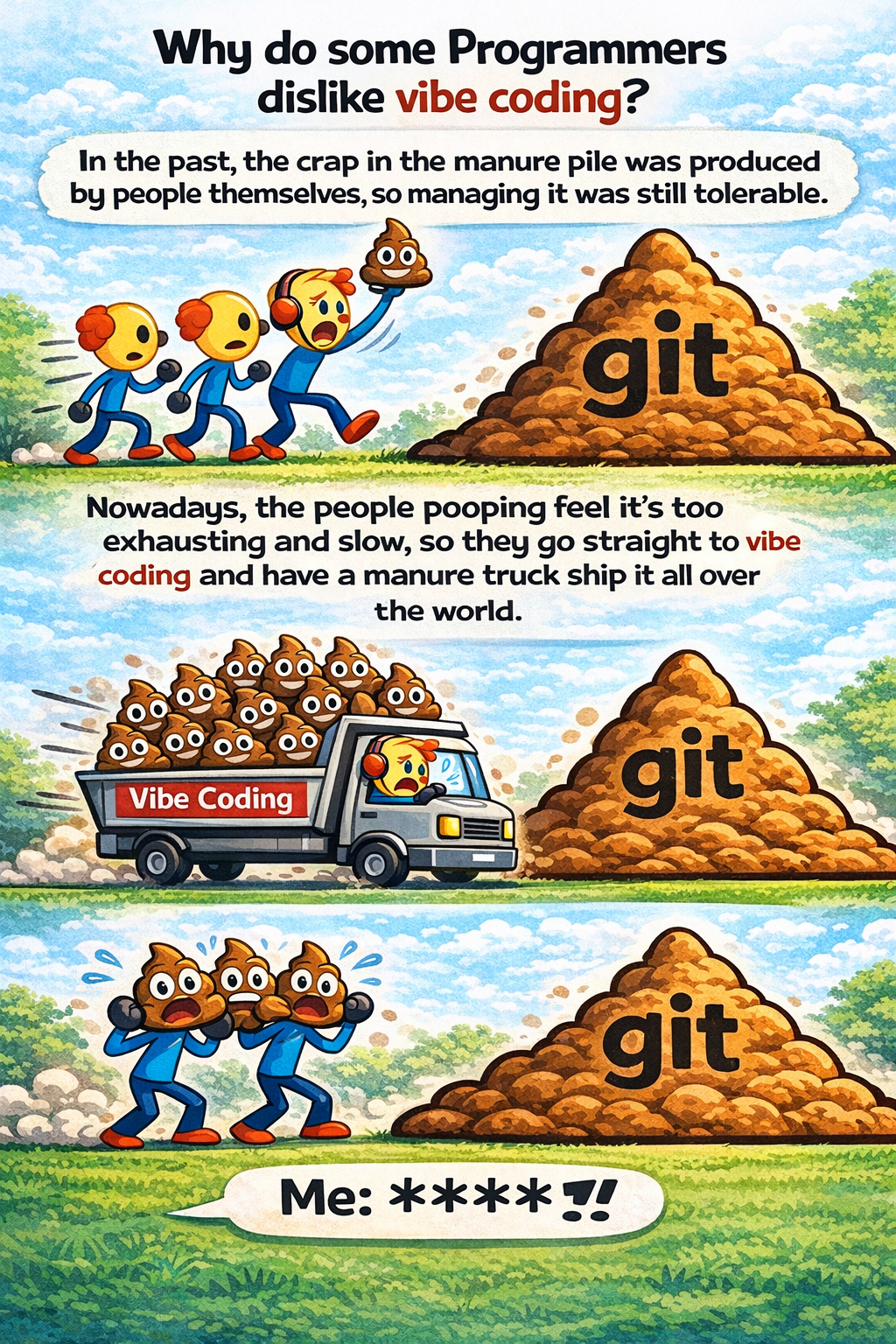
There was a time when we wrote bad code slowly.
It sounds almost nostalgic now, but that slowness had a hidden virtue. We had time to notice the code was bad. Time to feel a little uncomfortable about it. Time to ask questions, learn something new, and — if we were lucky clean it up.
Today, with AI assistants and what people proudly call “vibe coding”, we can generate:
- more code
- more abstractions
- more dependencies
- more surface area for failure
…in a fraction of the time.
And we call it Productivity.
The Illusion of Progress
Modern engineering culture celebrates velocity, we measure success by:
- how fast features ship
- how many tickets are closed
- how quickly prototypes appear
Automation, scaffolding tools, code generators, and AI copilots all push in the same direction: creation without friction.
But here is the uncomfortable question we rarely ask:
Who is paying the cost of this speed ?
Because speed is not free. It is just that the bill does not arrive immediately.
When a pull request gets merged in minutes, nobody asks:
- Who will maintain this in 6–24 months ?
- Who will debug it at 2am when it fails in production ?
- Who will try to understand why a simple change now requires touching seven services and three config files ?
Even more worrying:
Does anyone actually understand the system end-to-end ?
Or do we just understand how to generate it ?
AI can write code. It can scaffold entire services, wire libraries together, and make things look finished. AI accelerates decisions but it does not absolve us from them. If anything, faster generation means we need more judgment, not less. When we optimize purely for speed, we break that promise.
We stop being builders and start becoming debt issuers — shipping obligations forward in time, hoping someone else will deal with them.
That someone else is often a future engineer.
And quite often… it is us.